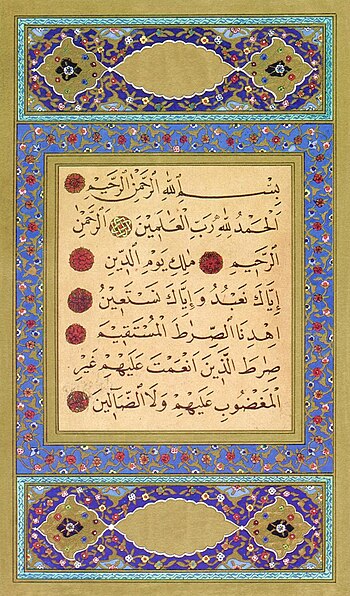
Next week I begin taking Arabic classes, downtown at the Roundhouse Community Centre. Arabic is a language that I have long been enamoured with and threatened by, perhaps because of the beautiful but indecipherable calligraphic characters. Whichever the reason, next week I start my once-weekly courses, 2 hours each, in order to "Learn about the most interesting language in the world: read and write the Arabic language. After 6 weeks you will be able to read and recognize simple Arabic signs and have a basic understanding of hundreds of words."
The course should run right up to the week before I leave for the field season in Jordan, giving me a great opportunity to practice what will surely be a slippery grasp of a difficult language.
Thankfully, I've studied a Semitic language (Biblical Hebrew) before, and so I have a basic understanding of the verb roots and some vocabulary, but I have never learned this type of language in a conversational and "everyday" capacity.
Being able to take the road from Madaba to Amman and read the signs along the way -- whether official directional signs (most of which also have an English translation), or rough signs made by locals selling fresh fruit and vegs, or pamphlets around town -- will be a rare treat and will help to make me feel less like a conventional tourist or visitor.
Reading commercial and vendor signs aside, I'm really excited by the prospect of being able to communicate a little better with the locals, the workmen, and our friends. They try extremely hard to learn bits of English with which to communicate with us, and the least we can do is try our hardest to learn some of their language.
Which brings up the topic of how much effort foreigners should be expected to put into learning the culture, language, and traditions of a place. I am currently reading Paul Rabinow's _Reflections on Fieldwork in Morocco_ (1977) and he notes that Jacques Berque once said that "language, women, and religion [are] the three domains of freedom in which North Africans most fiercely resisted European transgression (27)." Now, I know that I personally am not speaking of Morocco (as Rabinow is) when I speak of culture, "language, women, and religion", but similar sentiments of protection of one's culture appears in almost all geographically- and ethnically-defined places in the world.
Speaking from my own brief experiences in North Africa, Europe, Central America, and even North America, I see these three aspects of society as key when trying to understand and ingratiate oneself within a culture. In short, the more that you can learn, adapt, and respect these particular facets of daily life within the country you are travelling in as a foreigner, the more successful you will be as a guest and be welcomed into the local homes and lives of the area. If you don't attempt to speak the language, you can't begin to understand the whys or hows of daily life; if you don't understand and accept that in most cultures women rule the household and that many rules of etiquette are made in respect to women's privacy (without getting into the ethics of feminist theory), you will always be kept at arm's length and never welcomed into the private sphere of the home and family life; and if you don't respect the religion, you will always be recognized as an outsider, as this is often the defining aspect of cultural ethics, rituals, and traditions.


1 comment:
very well written my next youngest sister! :)
Post a Comment